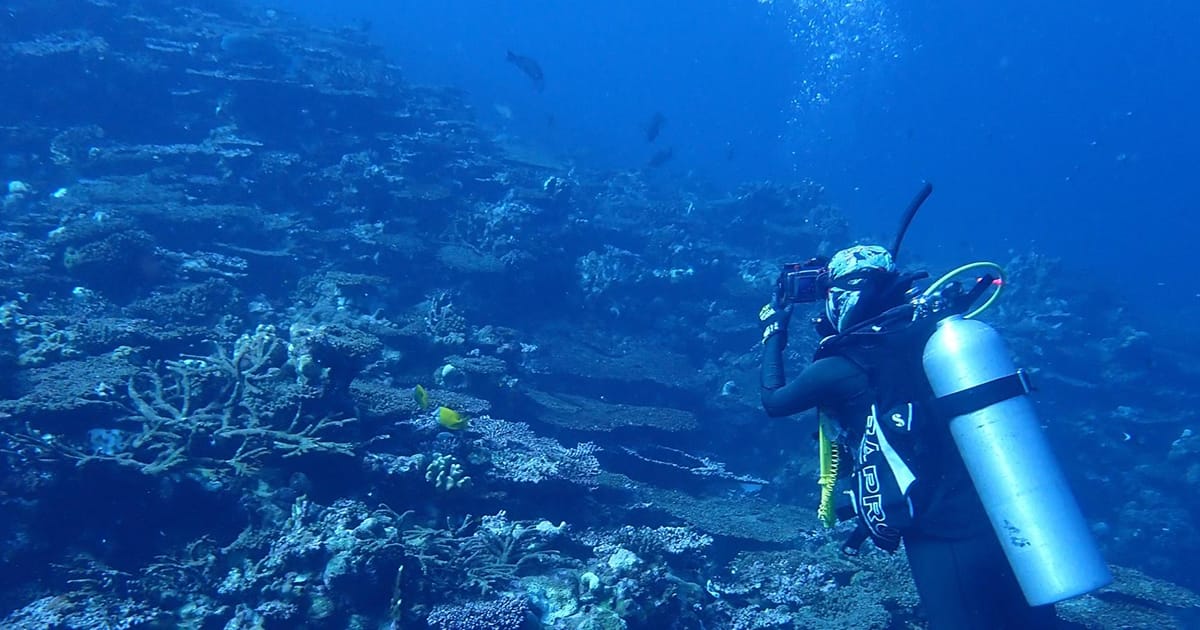
While the full impact of the coral bleaching will take months to be known, experts from multiple organizations and agencies which make up the WA Coral Bleaching Group have so far reported bleaching and mortality ranging from medium (11–30%) to extreme (>90%) levels across systems up to 1,500 km apart as a result of the marine heatwave. A newsletter summarizing the event has been released by the Group, available here.
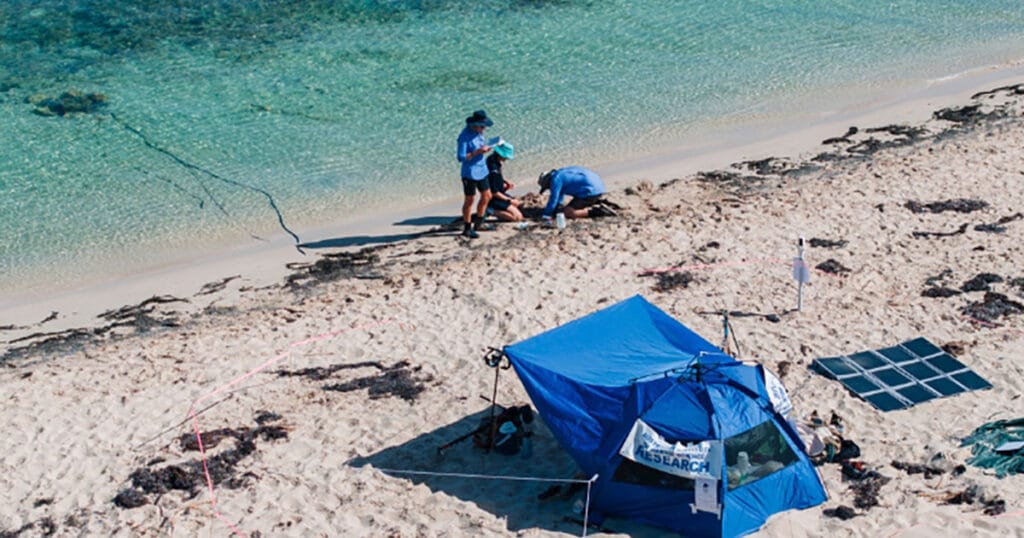
The experts gathered for a special Marine Heatwave Symposium at the Indian Ocean Marine Research Centre in Perth to discuss the findings in detail with researchers and managers across the state. A panel of scientists will later discuss the status, causes, and impacts of the marine heatwave at an open forum, which will be livestreamed.
Members of the WA Coral Bleaching Group, which is convened by the Australian Institute of Marine Science (AIMS), first began monitoring the marine heatwave in September 2024. Heat stress sufficient to cause coral bleaching peaked in December 2024/January 2025, followed by a slight easing with a late monsoon, and another peak in March/April 2025. Temperatures only began to recede in May.
AIMS Senior Research Scientist Dr. James Gilmour said the intensity of the event had been relentless, with the marine heatwave impacting reefs that had previously escaped bleaching.
“There has been little reprieve this time for any of our northwest reefs. Areas which had given us hope because they’d rarely or not been bleached before, like the Rowley Shoals, north Kimberley, and Ningaloo, have been hit hard this time. Finally, climate heating has caught up with these reefs.”
“The length and intensity of the heat stress, and its footprint across multiple regions, is something we’ve never seen before on most of the reefs in WA. For individual coral reefs, we are still crunching the numbers around Degree Heating Weeks (DHW)—a measure of heat stress on corals—but early estimates are over 15 DHWs on all reefs and up to 30 DHWs at some Pilbara reefs. Eight DHWs is the level of heat stress we generally consider severe enough to cause coral mortality.”
AIMS Coral Scientist Nicole Ryan, who coordinates the WA Coral Bleaching Group, added: “The heat stress will beat records set during the 2011 La Niña and the 2016 El Niño on all but the southernmost reefs, in the south of Ningaloo, Shark Bay, and the Abrolhos Islands.
“It will take several months to understand how much this year’s event will have impacted coral cover on various systems. A bleached coral is not a dead coral; it can recover.”
“For some coral species, it can take time after bleaching for them to recover or die. WA reefs are also spread across thousands of kilometers, with many being remote, making them difficult to monitor.”
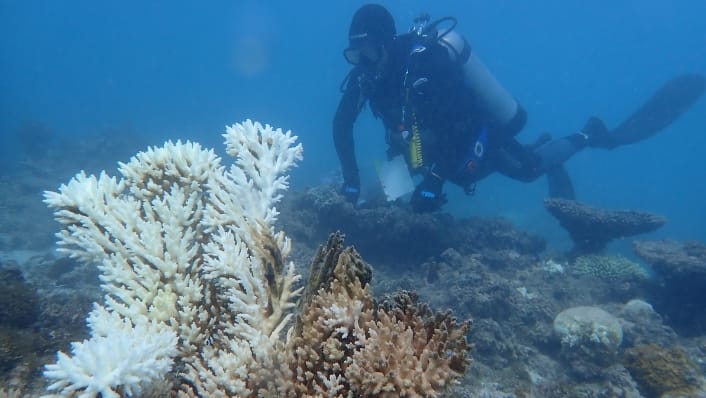
AIMS oceanographer Dr. Camille Grimaldi recorded ocean temperatures at coral reefs along the northwest during this period and found that local in situ measurements often exceeded satellite-derived sea surface temperatures, which are commonly used to monitor reef conditions globally.
“At Ashmore Reef, for instance, in situ temperatures recorded in the lagoon were up to 1.4°C higher than satellite estimates. Additionally, temperatures measured at 20 m depth exceeded satellite readings by nearly 0.5°C, indicating that ocean warming extended not just at the surface, but throughout the water column, spanning the depth range for most corals,” said Dr. Grimaldi.
“These differences highlight how local oceanographic processes, such as shallow water depth, upwelling, or mixing, can amplify or dampen the effects of regional heatwaves, making extreme events either more severe or more tolerable at specific reef locations.”
Dr. Claire Spillman, Seasonal and Marine Applications Team Leader from The Bureau of Meteorology, said: “2024 was the warmest year on record for global oceans. For Australian waters, sea surface temperatures during the summer of 2024–2025 were the warmest since official records began in 1900.
“The northwest waters of WA also experienced a warm winter in 2024, with persistent warm water at depth, and this background warmth increased the chances of marine heatwave conditions. While the 2010–11 WA marine heatwave was associated with a strong La Niña event, this was not the case this summer. The increased frequency of extreme and record-breaking ocean temperatures is associated with global warming.”

AIMS was among the organizations to conduct field surveys at various reefs, with the following findings:
- At Ashmore, March field surveys found medium (11–30%) levels of bleaching and mortality. The bleaching was variable, with most long-term monitoring sites showing low bleaching, but one lagoon site showed high levels of bleaching (31–60%).
- At Mermaid and Clerke Reefs in the Rowley Shoals, April field surveys were conducted not long after peak heat stress, with teams recording very high (61–90%) levels of mortality of most corals across long-term monitoring sites. Bleaching impacts affected all habitats, from the sheltered lagoon to the deep (30 m) outer reef slope.
- At inshore southern Kimberley reefs, AIMS scientists supported Bardi Jawi Indigenous rangers to conduct bleaching surveys in February, recording high levels (31–60%) of bleaching at most monitoring sites. They reported coral mortality in March.
- At sites in Ningaloo, surveys in May recorded high levels (31–60%) of bleaching and mortality, with the Tantabiddi and Jurabi areas particularly hard hit.
Dr. Gilmour added, “This huge WA bleaching event comes at a concerning time for coral reefs in Australia. It was synchronized with another mass bleaching event on the Great Barrier Reef and is part of the ongoing fourth Global Coral Bleaching Event, which began in 2023 and has circumnavigated our oceans in a wave of coral mortality. Climate change is driving these events, which are becoming more frequent, more intense, and more widespread, giving our amazing, valuable coral reefs little time to recover. And they need 10 to 15 years to recover fully.
“The key to helping coral reefs survive under climate change is to reduce greenhouse gas emissions. Good management of local issues like water quality and overfishing, and using interventions developed by marine science to help reefs will also assist.”